
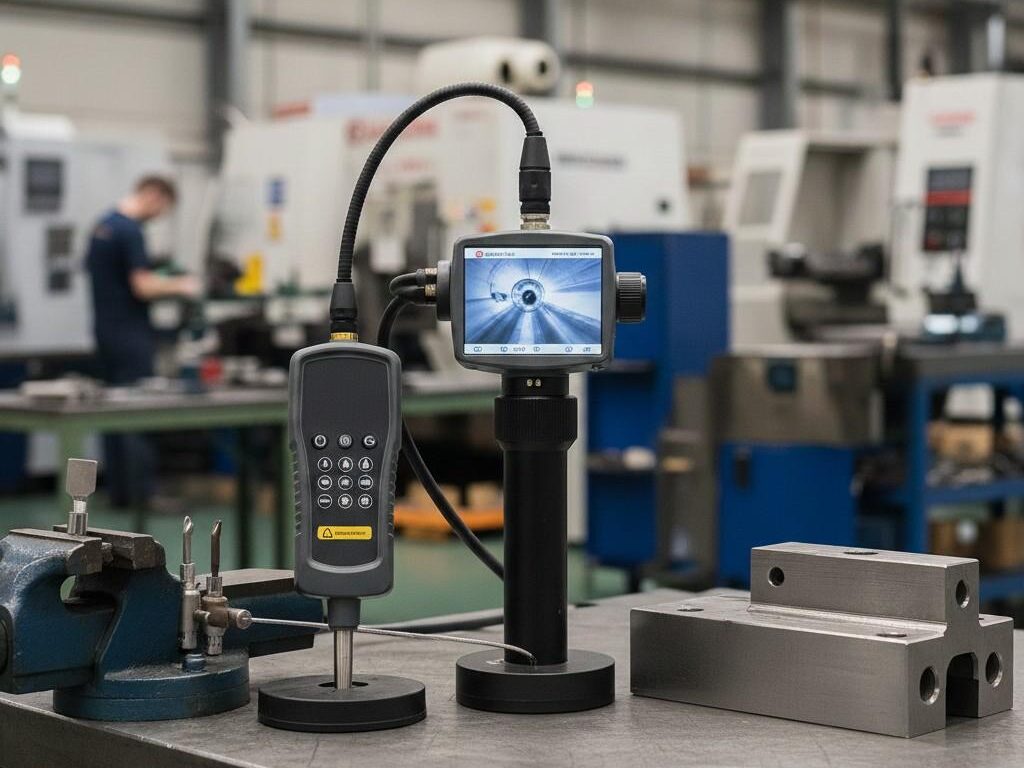
Field Inspection Toolkit: Using Borescopes, Portable Roughness Gauges, and Force Gauges Togethermet
Field inspection tools are essential to modern quality control, especially when inspections must be performed on the shop floor, in the field, or during maintenance shutdowns. From our experience working with manufacturers, labs, and training environments, we’ve seen that relying on a single inspection tool often leads to incomplete or subjective conclusions.
When borescopes, portable roughness gauges, and force gauges are used together, inspections become measurable, repeatable, and defensible. This integrated approach supports faster decisions without removing components or defaulting to lab testing.
What Are Field Inspection Tools and Why Single-Tool Inspections Fall Short
Defining Field Inspection Tools in Modern Quality Control
Field inspection tools are portable inspection tools designed for on-site or shop-floor use where lab equipment is impractical. Unlike fixed laboratory systems, these tools allow inspections to happen directly in operating environments.
They are commonly used for:
- Field quality inspection during production and maintenance
- Nondestructive inspection without damaging components
- Rapid evaluation when downtime must be minimized
Common Limitations of Visual-Only Inspection in the Field
Visual inspection alone—often using borescope inspection tools—creates several challenges:
- Subjective interpretations that vary between inspectors
- No measurable data to support pass/fail decisions
- Overuse of borescopes that increases wear without improving insight
We frequently see inspections stall because visual findings cannot be quantified.
Why One-Tool Solutions Create Feature Overload
Many single-tool solutions promise versatility but fail in real-world conditions:
- Visual findings don’t clearly connect to functional performance
- Brand reputation does not guarantee inspection accuracy
- High-priced borescopes may still deliver outdated image quality
Without supporting measurements, inspection decisions remain difficult to defend.
Understanding the Three Core Tools in a Field Inspection Toolkit
Borescope Inspection Tools – Visual Access Without Disassembly
Borescopes provide visual access to internal features without disassembly. They are best used for:
- Identifying cracks, corrosion, debris, or surface damage
- Locating areas that require further evaluation
Common limitations include:
- Straight-view cameras missing sidewall defects
- Long cables reducing maneuverability and reliability
- Battery-powered systems interrupting inspections
Portable Roughness Gauges – Measuring Surface Finish in the Field
Surface roughness measurement adds objective data to visual findings. A portable roughness gauge allows teams to:
- Measure Ra and Rz values on-site
- Compare results directly to specifications
- Reduce reliance on visual surface finish charts
Challenges include consistent measurement of internal diameters and cylindrical surfaces.
Force Gauge Measurement – Verifying Functional Performance
Force gauge measurement confirms whether surface condition affects operation. Using a force gauge in quality inspection helps evaluate:
- Actuation, insertion, or sliding forces
- Friction-related performance changes
- Wear-induced functional degradation
This step connects inspection data directly to real-world performance.
Why These Tools Work Better Together Than Alone
From Visual Detection to Quantified Validation
Each tool answers a different inspection question:
- Borescope: Is there a visible defect
- Roughness gauge: How rough is the surface?
- Force gauge: Does it affect function?
Together, they transform observations into measurable conclusions.
Eliminating Guesswork in Defect Severity Assessment
Not all visible defects are critical. Measured roughness and force data help determine:
- When a defect is cosmetic
- When it impacts friction, wear, or fatigue
Reducing Over-Inspection and Tool Wear
Using the right sequence minimizes unnecessary inspections:
- Fewer repeated borescope insertions
- Less wear on camera heads and cables
- Faster, more focused workflows
A Practical Field Inspection Workflow Using All Three Tools
Step 1 – Targeted Visual Inspection with a Borescope
Begin with a focused visual check:
- Inspect only when there is a clear reason
- Avoid unreliable phone-based or Wi-Fi systems
- Use side-view optics to inspect walls and transitions
This step identifies where further measurement is justified.
Step 2 – Quantifying Surface Condition with a Portable Roughness Gauge
Next, confirm surface condition:
- Measure internal diameters using appropriate probes
- Avoid overreliance on visual finish comparisons
- Verify calibration to maintain confidence in field results
Step 3 – Functional Validation Using a Force Gauge
Finally, confirm functional impact:
- Determine whether roughness affects operation
- Link friction, force, and wear
- Establish clear pass/fail thresholds
This closes the gap between appearance and performance.
Choosing the Right Portable Inspection Tools for Field Use
Accuracy vs Price – What Matters in Entry and Mid-Level Tools
Similar specifications can be misleading. Focus on:
- Measurement repeatability
- Ease of verification and calibration
- Practical accuracy under field conditions
High-end tools add value only when their capabilities are truly required.
Field Readiness Factors Engineers Often Overlook
Real-world usability matters:
- Battery life and downtime risks
- Cable length versus handling control
- Durability in industrial environments
Matching Tools to Inspection Environments
Different applications require different priorities:
- Field inspection tools for machining quality control
- Maintenance and overhaul inspections
- On-site failure analysis
Industry-Specific Use Cases for Combined Field Inspection
Metallurgists and Material Scientists
- Correlating surface finish with wear, fatigue, and friction
- Supporting material performance evaluations
Lab Technicians and Quality Control Engineers
- Reducing reliance on lab tools for routine checks
- Standardizing Ra and Rz data in the field
Educational Institutions and Training Centers
- Teaching inspection logic, not just tool operation
- Preparing students for real-world inspection workflows
Industrial Manufacturers
- Identifying defects earlier in the process
- Making faster decisions without sacrificing accuracy
Digital Data Capture and Reporting in Field Quality Inspection
Linking Visual, Roughness, and Force Data
- Creating traceable inspection records
- Reducing subjective reporting
- Supporting clear defect justification
Supporting Audits and Quality Standards
- Strengthening nondestructive inspection workflows
- Enabling defensible, data-backed decisions
Common Mistakes in Field Inspection—and How to Avoid Them
- Overreliance on visual inspection alone
- Skipping calibration and verification
- Using tools without understanding functional impact
Best Practices for Building a Reliable Field Inspection Toolkit
- Prioritizing tool complementarity over quantity
- Training inspectors on inspection logic
- Scaling inspection capability without added complexity
Moving from Inspection Guesswork to Measurable Confidence
Combining borescopes, portable roughness gauges, and force gauges turns field inspection from subjective evaluation into data-driven decision-making. This approach improves consistency, confidence, and efficiency across industries.
Explore Smarter Field Inspection Solutions with Metsuco
We work closely with teams to:
- Evaluate the right field inspection tools
- Build integrated inspection workflows
- Support accurate, defensible quality decisions
If you’re reassessing how inspections are performed in the field, at Metsuco, we’re always open to a practical, solution-focused conversation.
Add comment