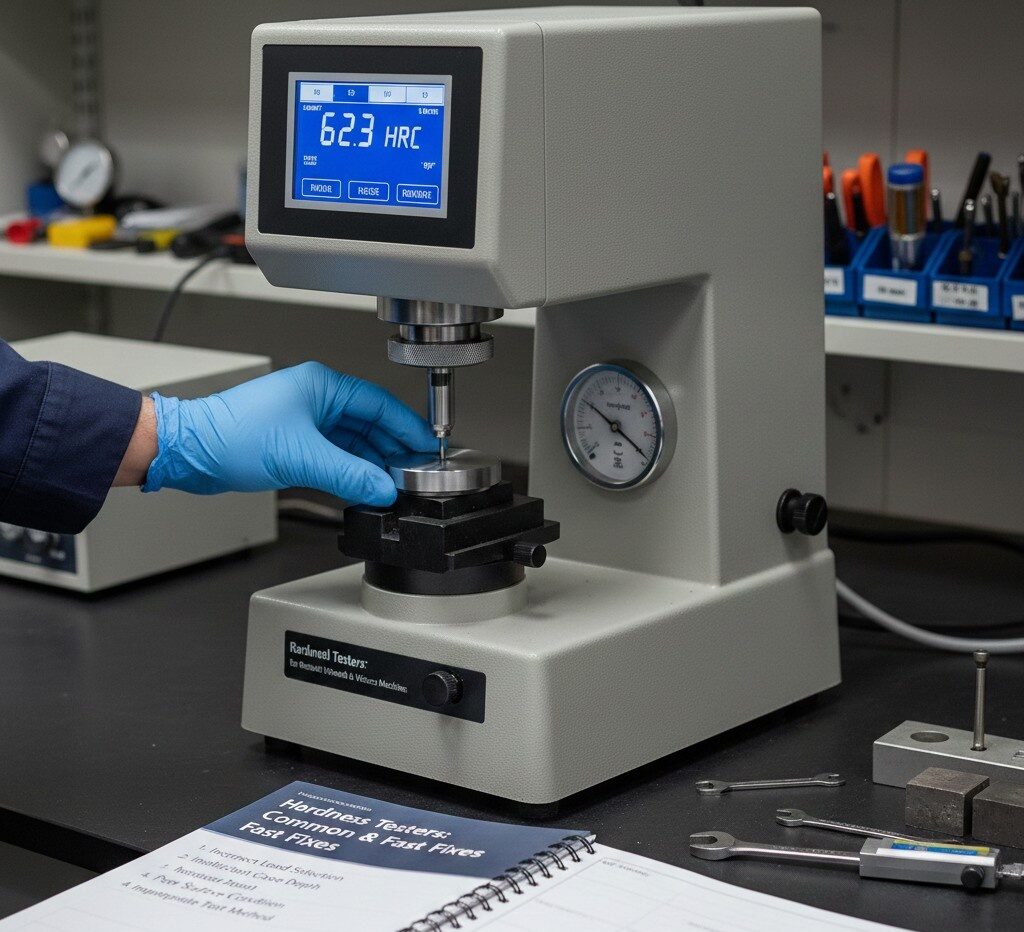
Hardness testing is often treated as routine—until results fall outside specification. When that happens, confusion, rework, and production delays follow. In most cases, the problem is not faulty equipment, but incorrect load selection, insufficient case depth, poor surface condition, or an inappropriate test method. This guide focuses on practical hardness tester troubleshooting—helping you identify root causes quickly and correct them without unnecessary recalibration or reprocessing. Why Hardness Tester Troubleshooting Matters In production and lab environments, inaccurate hardness readings can delay approvals, trigger unnecessary re-heat treatment, or lead to rejected parts. Too often, teams recalibrate machines or question heat treatment... Continue reading

Return to previous page
Category: Hardness Testing

For over 30 years, METSUCO has proudly served Houston, TX—a city built on the backbone of the oil and gas industry. From local fabricators to major energy companies, we’ve partnered with clients throughout the region to provide them with reliable hardness testing equipment and metallurgical testing supplies. But why is hardness testing so critical to the oil and gas industry? How are these tests applied in real-world scenarios where safety, performance, and millions of dollars are on the line? Let’s explore the importance of hardness testing in one of the world’s most demanding industries. What is a Hardness Test? In... Continue reading

Hardness testing plays a crucial role in manufacturing, quality control, and material selection across industries like aerospace, automotive, energy, and heavy machinery. Among the various methods available, Rockwell and Vickers hardness testing using hardness testers are two of the most widely used. Each serves a distinct purpose and is suited for different types of materials and applications. In this guide, we’ll break down how these hardness scales work, when to use each, and provide detailed hardness conversion tables for easy reference. Whether you’re testing hardened steel, soft metals, or thin coatings, understanding these scales can help you make informed decisions... Continue reading

In 2025, industries like oil and gas, automotive, aerospace, and energy are expected to face rising material and maintenance costs. A recent study from McKinsey revealed that unplanned equipment downtime alone costs industries $50 billion annually. Hardness testing using hardness testers, a straightforward yet powerful tool, is a critical strategy for reducing these expenses. By ensuring material durability, extending equipment life, and enabling predictive maintenance, it’s a cost-saving game changer. Let’s explore how industries can leverage hardness testing to safeguard their budgets while maintaining operational efficiency. The Role of Hardness Testing in Cost Reduction Preventing Material Failures Material failures don’t... Continue reading
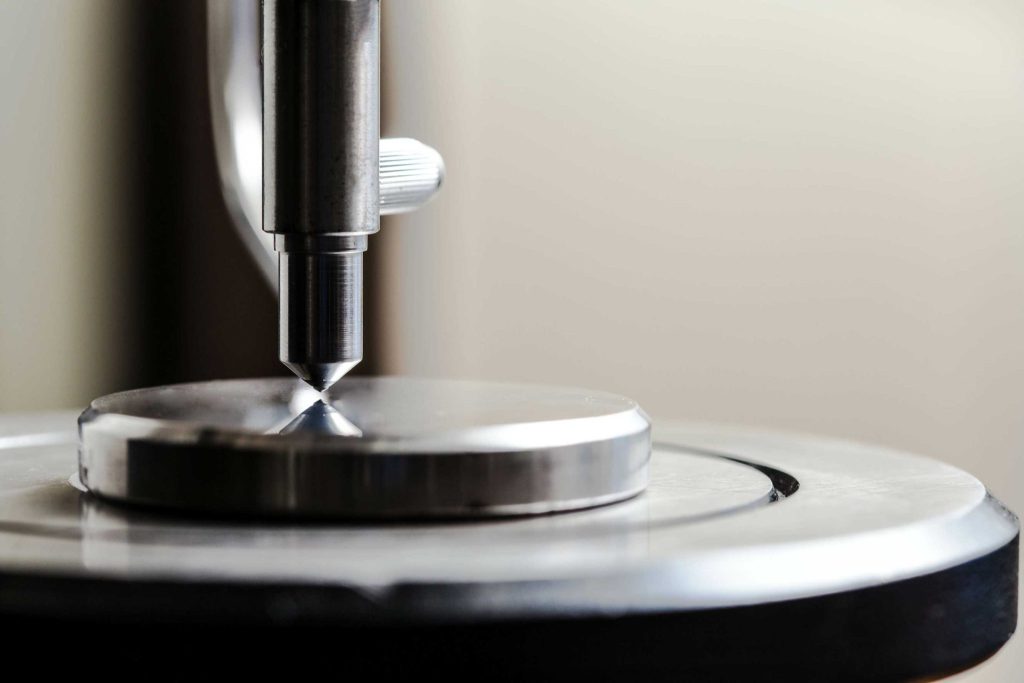
In a vast array of industries, engineers, production teams, and manufacturers rely on various hardness testing methods to assess the mechanical properties of materials accurately. Among these methods, the Vickers and Knoop hardness tests are widely used for their versatility and precision. While it is true we have covered Vickers testing extensively, often the two get confused for one another to those who are not in the trenches day to day. That is why we'll explore the differences between these two tests, their respective advantages, and when each test is best suited for specific applications. Understanding Vickers Hardness Testing The... Continue reading

In the intricate world of manufacturing, ensuring the quality and reliability of materials is paramount. From automotive components to aerospace parts, the integrity of materials directly impacts product performance, safety, and longevity. Among the array of tools available for material quality control, Vickers hardness testing using Vickers hardness testers stands out as a crucial technique. In this blog, we’ll delve into the significance of Vickers hardness testing and how it contributes to maintaining high-quality materials in manufacturing. Understanding Vickers Hardness Testing Vickers hardness testing is a method used to assess the hardness of a material based on the size of... Continue reading

Hardness testing plays a pivotal role in the world of metallurgy, manufacturing, and construction. It provides valuable insights into a material’s mechanical properties, durability, and suitability for specific applications. Traditionally, hardness testing has been conducted in dedicated laboratories, but with advancements in technology, portable hardness testers have emerged as a game-changer. In this blog, we’ll explore the need for hardness testing machines on site and the crucial role portable hardness testers play in manufacturing and construction. Understanding Hardness Testing Hardness is the resistance of a material to deformation, and it’s a fundamental property that helps engineers and metallurgists assess a... Continue reading

Hardness testing is a crucial aspect of metallurgy, as it provides valuable insights into a material’s mechanical properties and overall quality. There are various methods available for measuring hardness, each with its own set of advantages and limitations. In this blog, we’ll delve into the Vickers Hardness Test and discuss when it’s best to use this method over other metallurgical hardness tests. Understanding Hardness Testing Hardness is the resistance of a material to deformation, and it is an essential property for evaluating a material’s ability to withstand mechanical stress and wear. Different materials require different hardness testing methods due to... Continue reading

Hardness testing plays a crucial role in metallurgy, allowing engineers and researchers to evaluate the mechanical properties of materials. Numerous methods exist to measure hardness, each with its own advantages and limitations. One commonly used technique is the Rockwell hardness test. In this blog post, we will explore the circumstances where using the Rockwell Hardness Tester and scale over other metallurgical hardness tests makes sense. Understanding the Rockwell Hardness Test The Rockwell hardness test is an indentation-based method that measures the depth of penetration of an indenter into a material. It assesses hardness by measuring the permanent depth of the... Continue reading
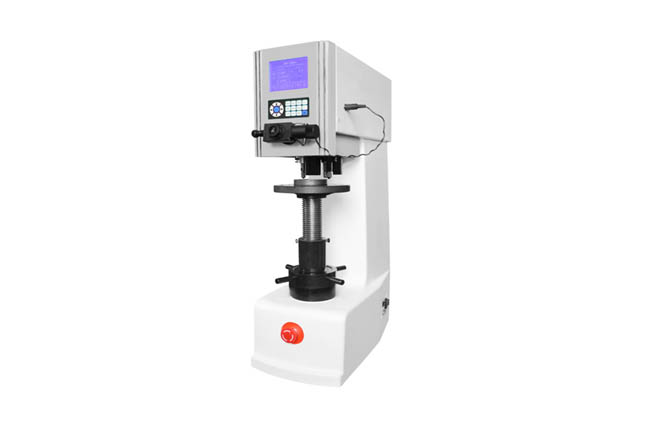
A Digital Hardness Tester is a measuring instrument used to determine the hardness of a given material. It is an essential tool in industries where metals and alloys are produced or used. This includes a variety of industries including auto manufacturing, aerospace, oil and gas, and many others. Testing the hardness of metal including steel or composite alloys is essential to the integrity of the product being manufactured or the structure that is being engineered or constructed. Hardness testing uses hardness testers to detect flaws, delamination, and weak spots before they become costly and an embarrassment to the company. In... Continue reading
Showing 1–10 of 26 posts